
How many restrooms does a marathon need in Lowell?
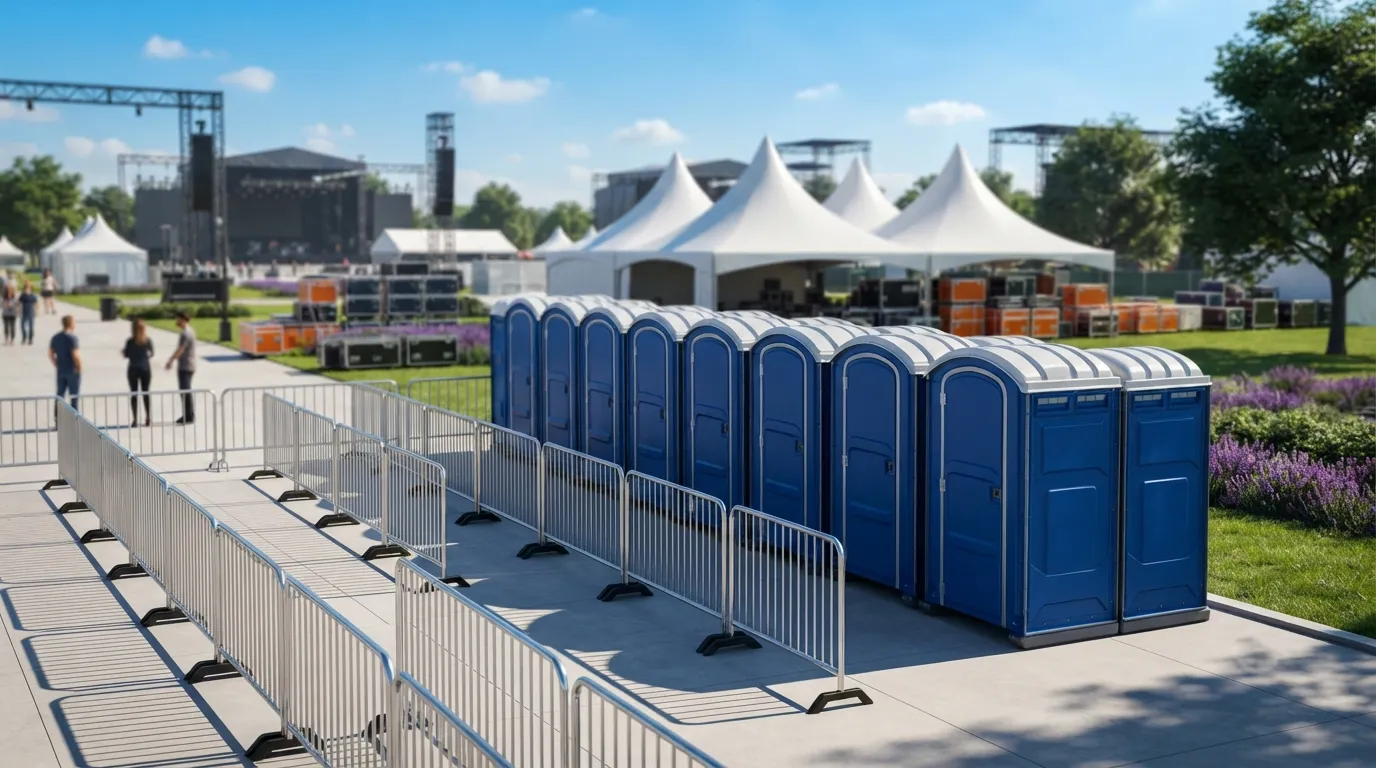
Course length and runner count both drive the number. A road race with a few hundred runners might need only event restroom rental at the finish line and one or two water stops. A full marathon through Lowell with thousands of participants needs units at every aid station, not just the ends. OSHA's construction ratio at 1926.51(c) calls for one toilet per 20 workers on a jobsite, and while a race isn't a construction site, race directors use the same logic: count your peak crowd, not your average one. Spectators cluster near the start, the finish, and any point with a good view, so plan extra standard porta potty rental units there. For a course that loops through downtown Lowell and back, aid stations every couple miles each need their own unit or two. If your race draws a crowd with strollers, older spectators, or wheelchair users, ADA Standards section 213.2 requires at least 5 percent of clustered units be accessible, with a minimum of one. Our ADA accessible porta potty units meet the 60 inch turning circle called for under ADA Standards 304.3.1, and the ramp access follows the 1:12 slope limit in ADA Standards 405.2. Not sure where to start counting? The how many porta potties do I need guide walks through runner counts, volunteer counts, and spectator estimates side by side.
Where should restrooms go along the race route?
Put them at the start corral, every aid station, and the finish chute, with extra capacity wherever runners funnel through a narrow point. Placement matters as much as count. A unit tucked behind a fence line does nobody good if runners can't find it fast, so use our porta potty placement guide to map sightlines along the course. Lowell's race routes often thread past parks and public buildings, and units need firm, level ground per ADA Standards 302.1 so wheelchair users and anyone unsteady on their feet aren't fighting for footing. Access paths should hold to the 36 inch clear width in ADA Standards 403.5.1, and doors need at least 32 inches of clear opening under ADA Standards 404.2.3 for anyone maneuvering a wheelchair or a stroller. If your event needs barriers to keep runners on course and spectators off it, pair your restroom order with crowd control barrier rental or full temporary fence rental around staging areas. Race timing tents and medical stations often run on generators, and if your event needs a temporary power pole, brace it the same way a light tower gets braced: guy-wire it at three points spaced evenly around the pole, anchor each wire to a stake driven at a 45 degree angle away from the pole base, and check tension after the first hour once ground settles. That is the short version of how to brace a temporary power pole for a one-day event, and GFCI protection per OSHA 1926.404(b)(1)(ii) still applies even then.
Do we need handwashing stations too?
Yes, and most race directors underestimate how much runners want to rinse hands and faces after aid stations serving gels and sports drink. A handwashing station rental placed next to your restroom cluster keeps lines moving and keeps hands cleaner before the next water stop. Under 29 CFR 1910.141(d)2, washing facilities need soap and a way to dry hands, not just sanitizer, so a proper sink beats a squeeze bottle. If your race includes a post-run meal or a beer garden, a portable sink rental near food service tents covers that need directly. For quick-touch spectator zones where full sinks aren't practical, a hand sanitizer station rental fills the gap. Larger races in Lowell sometimes pair a restroom trailer rental at the finish line festival area with standard units along the course, giving VIP runners and sponsors a nicer option while everyone else uses the standard fleet. A 4 stall restroom trailer handles finish-line crowds well without the line backup a handful of single units creates.
How far in advance should we book race restrooms?
Book as soon as your course map and runner count are set, ideally 60 to 90 days out for a large event. Race season fills fast, and popular routes through Lowell compete with weddings and festivals for the same delivery windows. Early booking also gives time to plan temporary fence rental for staging.
What does it cost to rent restrooms for a race?
Standard units in the event category run $200 to $800 each depending on count and duration. A large marathon with aid stations and a finish festival costs more than a small 5K needing only two or three units. See porta potty rental cost for a full breakdown.
Can we get restrooms delivered the morning of the race?
Usually, yes, but early morning race starts mean delivery the evening before is safer. Delivery fees run from about $50 for a week-long placement up to $500 for rush jobs, so locking in your date early avoids premium rates. Ask about emergency porta potty rental if plans change late.
Do we need ADA-accessible units for a public race?
Yes, if the event is open to the public. ADA Standards 213.2 requires at least 5 percent of clustered units be accessible, never fewer than one, so even a small race needs one ADA unit. See ADA restroom requirements for the full standard.
How many handwashing stations pair with 15 restrooms?
Plan on one handwashing station per cluster of 3 to 5 toilets near aid stations and the finish. A race with 15 units spread across a Lowell course might need 4 to 5 handwashing points, more near food service than empty stretches of road.
Next step
Get a delivery date
Tell us the address, the dates and the headcount. We size the order and confirm the route.